
Coach Butch's Corner
ARTICLE: Youth Fitness Magazine: Building a Batting Foundation (featuring No Fear Head Coach Butch Smith)
Coach Butch's NO FEAR BBC Rules
UNIFORMS:
- Players must always wear a hard cup to practice and games.
- No jewelry.
- Pitchers always bring a jacket.
- Uniforms must be worn properly. Jerseys tucked inside at all times.
FIELD CONDUCT:
- Warnings or ejections- if you disagree with an umpire's call, keep your opinion to yourself. Do not throw or kick your bat, helmet, or the dugout fence. Do not argue, mouth off, or glare at an umpire. If you scream or give lip to any umpire at any time, you will be removed from the game.
- Hustle!!! Run on and off the field. If you are hustling, you won't have time to give an umpire an angry look or nasty comment.
DUGOUT BEHAVIOR:
- Stay alert and involved in the game. Being in the dugout is game time and NOT break time. Keep your focus on the field and the game that we are playing.
- No horseplay or verbal abuse of teammates. Your teammates come to the field to complete - not to be put down or mistreated by a teammate.
- NO dugout visitation with friends or family. You can visit before or after the game - NOT DURING THE GAME.
- No food is allowed in dugout. Eat before or after the game.
PARENT RESPONSIBILITIES:
- Please be positive in the stands to each and every boy. Do not argue with the umpires or coaches. Let the coaches coach! Demonstrate good sportsmanship at all times.
PLAY LIKE CHAMPIONS:
- EXCEL IN EFFORT. Give your best 100% effort always.
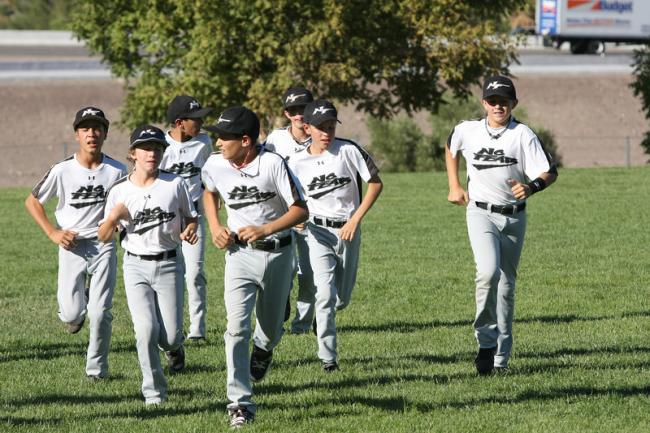
- HUSTLE on and off field, walking is prohibited. We hustle and run at all times! A team that hustles is a team that has Great Spirit and one that plays with discipline and enthusiasm. Hustle does not require awesome talent; it requires simple commitment and desire. When we compete with other teams on the baseball field, this is part of the game we will always win. Regardless of the competition, WE WILL OUT HUSTLE EVERY TEAM WE PLAY.
- DEVELOP LOYALTY. Always put the team first. Be a team player. Help your teammates achieve team goals.
- SUPPORT YOUR TEAMMATES. Baseball is a team game. We succeed and fail on the field as a team. Be supportive of your teammates at all times, encourage and cheer for one another.
- THINK BASEBALL. Concentrate! Whether in a game or at practice, keep your mind focused on the team's baseball objectives.
- MASTER THE FUNDAMENTALS. Learn the basic skills to become a skilled player on the game, start by being a good practice player.
- MAKE EVERY MISTAKE A PART OF YOUR DEVELOPMENT. Learn from adversity. Mistakes are common in baseball. Errors are part of the game. Every player, regardless of skill, will make errors that are both physical and mental. What sets winning teams apart from others is ATTITUDE. When a mistake is made, forgive yourself and make a commitment to learn from the experience.
- ANTICIPATE EACH PITCH AND FIELDING POSITION. Players are never spectators--when you are on the field, be prepared to be involved in every play. Know your assignments. With every pitch anticipate the action and get in position to make the play.
- VALUE SPORTSMANSHIP. Be a good sport. Show respect for opponents, officials, and fans. Most of all, demonstrate your respect for your team and the great sport of baseball by conducting yourself with honor on the field.
- BE A GOOD COMMUNICATOR. There is time to talk and time to listen-know the difference. Be attentive and listen well to your coaches. Respond positively to directions.
GET THE EDGE
(10 Keys to a Strong Hitting Attitude)
- Eliminate distractions. Good hitters know to keep their attention tightly focused on the game.
- Study the pitcher. The opposing pitcher is an open book filled with valuable information that hitters can use. Watch the pitcher for clues that can provide advantages for the hitter.
- Defeat fear. Fear of failure and the fear of being hurt are negative thoughts that blind a hitter's batting eye. The best way to handle fear is to confront it. Direct a positive answer to each negative thought and put fear away.
- Be confident. Confidence is a decision you make, it is not something you have to search after.
- Get comfortable at the plate. A batting stance that is uncomfortable or awkward will diminish the hitter's ability to concentrate. Eliminate physical tension in the arms and chest by avoiding unnatural hand, arm, and bat-angle positions. When a hitter executes the hitting plan correctly, he will be physically balanced and comfortable at the plate.
- Relax. Breathe deep to aid relaxation. Proper breathing gets extra oxygen in the bloodstream and will help keep the hitter's mind clear.
- Concentrate on the pitch. Create tunnel vision toward the pitch and omit all other stray thoughts. Zero in on the ball.
- Attack the ball. Anticipate that each pitch will be in the strike zone. Think swing and react! If it's a strike, pull the trigger and hit the ball hard. If it's a ball, leave the barrel cocked.
-
Build on success. Stay positive; each hitter should focus on what he is doing well. Be willing to make small adjustments, but only when necessary. Avoid making radical changes to the hitting plan as a way of compensating for the uncertainty or frustration hitters may experience in a slump.
Recruiting Advice
- Make sure that this is HIS dream and not YOURS. Dads (or moms) reliving their glory days, or failures, create nightmares for their children. A sober dose of reality is needed here. You need to examine whether you are trying to build your own ego or help your child succeed in HIS DREAM. Get this matter in proper perspective.
- Have a professional (professional scout / college coach) evaluate and give you an HONEST opinion of your son's talent. Don't let someone who looks to make a dollar off you give you his opinion, but one who truly knows what coaches and scouts are looking for. And, don't be thinned skinned about it! Leave your ego and pride at home. By doing so it may help you save several thousands of dollars and spare your child some misery.
- Set realistic goals for your child. Don't put him in a situation where he is destined to fail. Your ego trip might affect his entire life and mental health. A little maturity and common sense on your part could save him a lifetime of misery. Know what he is capable of and encourage him to seek to be the best he can be at that level. Having a fun and successful career at a small time school is far greater an experience, than living a life of failures and disappointments, while looking for the big pie in the sky that will never come.
- Develop a plan to help him succeed at the level he is capable of playing. There is little use in the small time player (a player who will not play at the D1/Major D2/Professional level) wasting thousands of dollars at major showcases and scouting combines to produce national exposure. A wiser decision would be to send him to local college camps, local showcases designed to provide local exposure and free local professional tryouts.
- Do your homework. Know what is needed and be well educated in the process. Don't take the task lightly expecting someone else to do it for you (HS coach / guidance counselor). To do so could mean disaster and future heartache. Take control of the situation like a responsible parent.
- Investigate. Investigate every showcase, recruiter, school, coach and program that shows interest in your son. Help him make the right decisions based on FACT and not fiction. Remember the woods are full of ticks and leeches wanting to suck the life out of you. "Buyers beware!" Before sending your son to a showcase, ask a few college coaches if they will be in attendance and what they think of the organization. Before considering a school, spend some time speaking to former players and parents about the coach, the program and their experiences while there. It could save you some of that hard earned cash and a lot of trauma.
- Research. Know the recruiting rules. Many of these "Fly-By-Night" organizations are walking a tight-rope with NCAA recruiting rules. They can easily be considered an "agent", thus disqualifying your child. The scum want your money, not your respect! The person who promises to make tapes of your son, develop a profile, take them to the coach or scout, recommend your son to them as a qualified player, while taking money from you as payment for his services has become his agent. BEWARE, there are "vermin" amongst the crowd of folks watching your son play. They are looking for a one time score (taking your money) and then could care less what happens to you or your child.
- Take a long-term approach to your decision making. Always look at what is best for your child's future. A scout once told me, "Be careful you might get what you are wishing for!" His point being that your dream may not be in your ultimate best interest. The mature individual is the one who knows what he/she wants down the road and not just a passing fancy. Believe it or not, there have been quite a few individuals who passed up a major league careers because it wasn't the type of lifestyle they wanted for their family or themselves. Many drop out of the minor leagues every year, not because they couldn't make it as a player, but because the lifestyle of the professional ball player is a rough road. Know what your child wants, but more importantly what is best for them. Be a mind of reason and sensibility to them amidst a world of glamour and insanity.
- Help your son prioritize his life. What are the things that are truly important to him and to your family? Would you rather him win a World Series ring or have his name be written in Heaven? Would you rather him win a College World Series or be the Father of The Year? I am constantly reminded of the fact that most successful people have an abiding sense of the truly important things in life. Take the opportunity to teach him to live to the important, rather than the urgent. Baseball careers ALWAYS end, but life goes on into eternity.